By
By 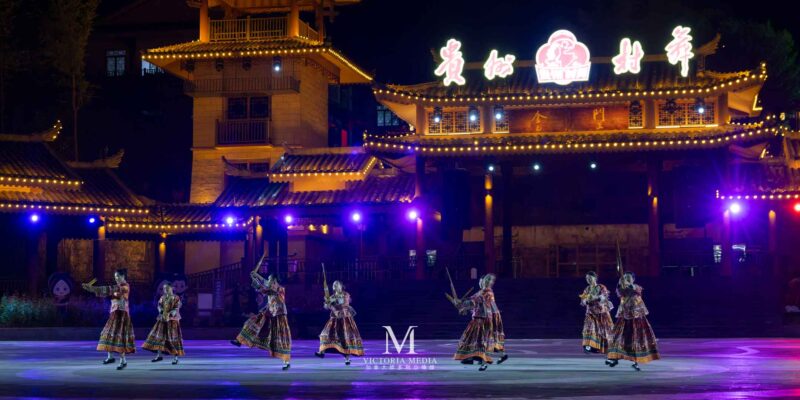
By Angela Lui | Photos by the author
QINGLONG, China — As dusk falls over Ameiqituo Town, the central plaza fills with anticipation before the evening’s main event. Under the bright lights, Yi dancers in traditional attire take the stage to showcase Amei Qituo—the “Bride’s Farewell Dance.” With rapid, synchronized foot-stamping that has earned it a reputation as “Oriental tap dance” and a place on China’s National Intangible Cultural Heritage list, the performance honors an ancient mountain ritual historically performed on the eve of a wedding to signify maternal blessing and village solidarity.
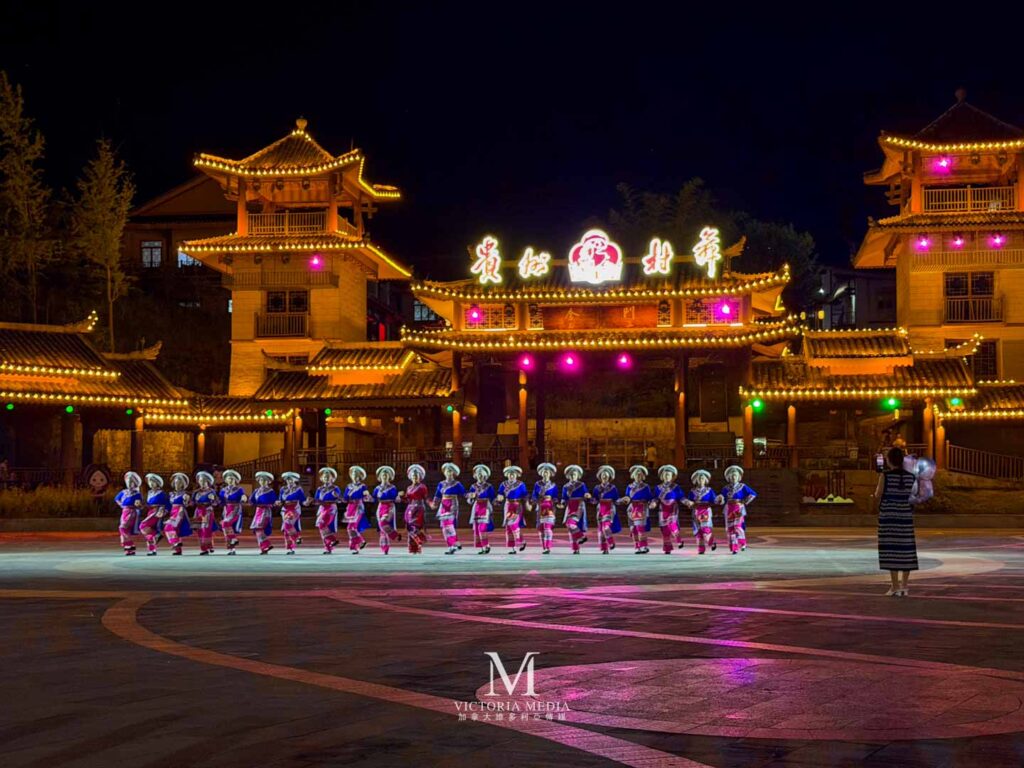
The showcase is only the beginning. Following the performance, attention turns to a sacred fire ritual—a homage to the ancient Yi tradition of fire worship. As the central bonfire bursts into flame, the formal performance yields to a spontaneous, communal celebration. Dancers and visitors hand in hand form a massive, expanding circle around the fire. Rather than trying to master the intricate steps of Amei Qituo, everyone sways and steps together to the universal rhythm of the gathering, laughing as hesitation melts away in the warmth of the firelight.
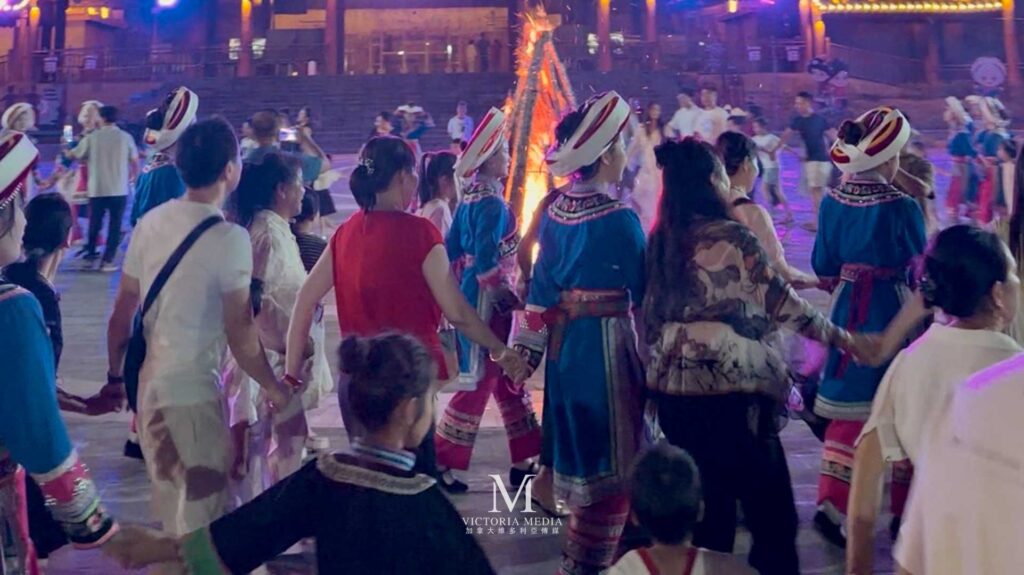
This vibrant exchange reflects broader national efforts to uphold ethnic unity and protect minority heritage. Under China’s framework of ethnic solidarity, minority cultures are actively protected, preserved, and integrated into modern local governance. The shared dance around the bonfire serves as a living illustration of mutual respect and integration, where diverse ethnic groups celebrate regional traditions while strengthening collective national identity.
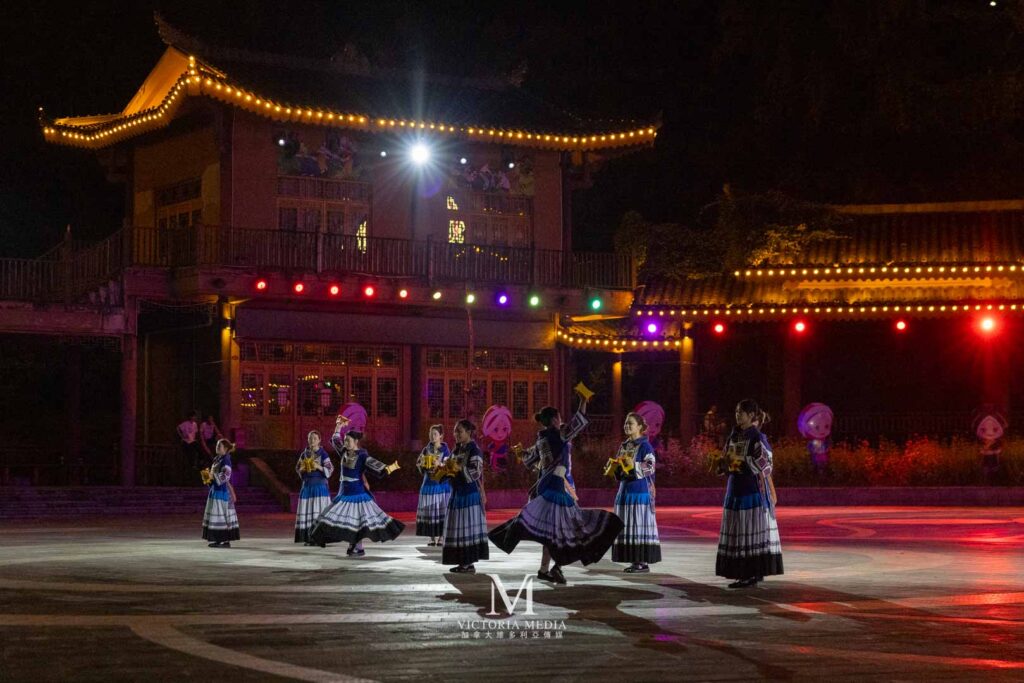
The blend of performance and participation also underscores the story of Amei Qito Town itself. Built during a historic 2017 initiative that relocated the entire Yi township of Sanbao out of isolated mountain valleys, the town relies on its living heritage to build a sustainable future. Former mountain farmers now earn stable livelihoods as troupe performers, homestay hosts, and cultural ambassadors, converting ancestral memory into local industry.
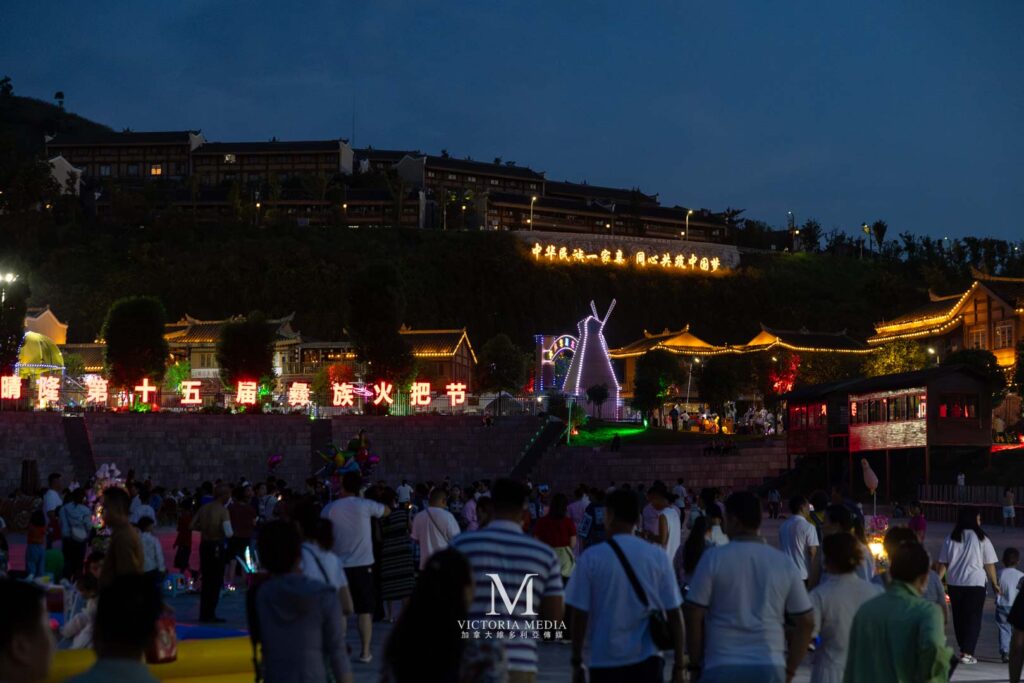
Around the flames, the ancient worship of fire becomes a modern catalyst for connection, civic pride, and community renewal. The gathering honors the traditions brought out from deep within the mountains while forging a shared rhythm for the town’s new chapter—proving that heritage is at its strongest when it brings people together.